
Petrobras and Pemex to Sign Strategic Cooperation Agreements in Brazil
Brazil's Petrobras will sign cooperation agreements with Mexico's Pemex in Rio de Janeiro, expanding collaboration in deepwater exploration, oil production, refining and petrochemicals.

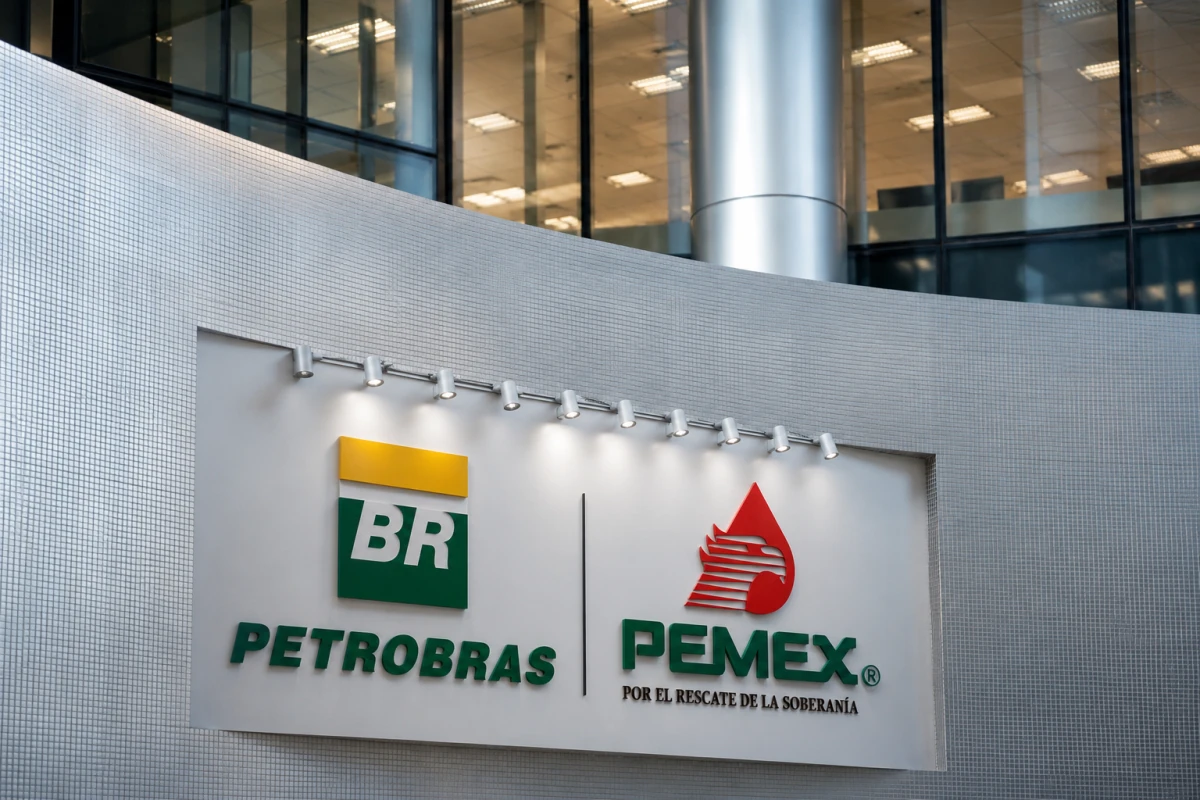
Petrobras and Pemex to Sign Strategic Cooperation Agreements in Brazil
Rio de Janeiro, Brazil — Brazil’s state-run oil company Petrobras is set to sign memorandums of understanding with Mexico’s Pemex on Tuesday, June 23, 2026, marking a significant step toward deeper energy cooperation between Latin America’s two largest economies.
A New Energy Alliance Between Brazil and Mexico
The agreements are expected to create a framework for strategic and technical cooperation across several areas of the oil and gas industry, including offshore exploration, crude oil production, refinery operations and petrochemical development.
The signing ceremony will take place in Rio de Janeiro and will include the chief executive officers of both state-controlled companies. Pemex Chief Executive Juan Carlos Carpio Fragoso is leading a Mexican technical delegation that traveled to Brazil alongside officials from Mexico’s Energy Ministry to advance the partnership.
The deal reflects months of diplomatic and technical coordination between Brazil and Mexico. Brazilian President Luiz Inácio Lula da Silva and Mexican President Claudia Sheinbaum have both supported closer energy integration, with Petrobras’ offshore expertise seen as a key resource for Mexico’s future oil strategy.
Why Petrobras Matters to Pemex
Petrobras is widely recognized for its experience in deepwater and ultra-deepwater exploration, particularly in complex offshore environments. That expertise is especially valuable for Mexico, where large sections of the Gulf of Mexico remain underdeveloped compared with Brazil’s prolific offshore basins.
For Pemex, the partnership comes at a critical moment. The Mexican state oil company has struggled with declining output, aging fields and a heavy debt burden. Pemex production has fallen sharply from its 2004 peak of about 3.4 million barrels per day to roughly 1.6 million barrels per day, increasing pressure on Mexico to find new sources of growth.
Mexico’s government hopes Petrobras can help Pemex improve offshore exploration capacity, optimize mature field recovery and evaluate deeper reserves that have not yet been fully developed. The agreement may also support technical studies related to refining and petrochemical projects.
Focus on Deepwater Exploration
One of the most important parts of the cooperation is expected to involve deepwater and ultra-deepwater exploration in the Mexican side of the Gulf of Mexico. President Sheinbaum has emphasized Petrobras’ advanced knowledge in this area as a major reason for the alliance.
Brazil’s offshore success has been built through decades of investment in technology, engineering and reservoir management. Petrobras has developed strong capabilities in operating difficult deepwater projects, making it one of the most experienced national oil companies in this segment.
For Mexico, deepwater exploration remains a major opportunity but also a major challenge. Pemex has traditionally focused on shallow-water and onshore production, while private and foreign partners have played important roles in more technically demanding offshore projects. A technical partnership with Petrobras could help Pemex strengthen its internal capabilities.
Mature Field Recovery Could Be Another Priority
Beyond offshore exploration, the agreements are also expected to include cooperation on mature oil fields. Many of Pemex’s most important assets have been producing for decades, and output from several fields has declined over time.
Petrobras has experience using advanced reservoir analysis and recovery techniques to extend the productive life of aging assets. Through the cooperation, Pemex could gain access to technical methods designed to identify deeper or previously untapped reserves in mature fields.
This could be important for Mexico’s short- and medium-term production goals. While deepwater projects can take years to develop, mature field recovery can sometimes deliver faster improvements if the right technology and investment are applied.
Refining and Petrochemicals Also Included
The Petrobras-Pemex cooperation is not limited to exploration and production. The alliance is expected to cover refinery operations and petrochemical projects, areas that are strategically important for both countries.
Mexico has placed strong emphasis on energy sovereignty, domestic fuel production and strengthening Pemex’s refining system. Brazil, meanwhile, has been working to improve refinery performance and expand energy security through Petrobras’ investment strategy.
By sharing technical knowledge, both companies may be able to evaluate operational improvements, processing efficiency and downstream investment opportunities. The petrochemical component could also support broader industrial cooperation between Brazil and Mexico.
A Political and Economic Signal
The agreement also carries political weight. It signals a push by Brazil and Mexico to strengthen South-South cooperation and build closer economic ties between two of the region’s largest economies.
For President Lula, the deal aligns with Brazil’s goal of expanding Petrobras’ international presence and reinforcing Brazil’s role as a leader in Latin American energy. For President Sheinbaum, it supports Mexico’s effort to modernize Pemex while maintaining strong state control over the energy sector.
The partnership may also reflect a broader regional trend in which national oil companies seek cooperation rather than direct competition. As energy markets face volatility, technology costs and long-term transition pressures, state firms are looking for ways to share expertise and reduce operational risk.
Challenges Ahead
Despite the strategic importance of the agreements, the partnership will face challenges. Pemex’s financial situation remains one of the biggest concerns. The company has carried a large debt load for years, limiting its ability to invest aggressively in new projects.
Deepwater development is also expensive and technically demanding. Even with Petrobras’ support, turning exploration opportunities into commercial production could require major capital investment, long timelines and careful risk management.
Another question is how far the cooperation will go beyond technical studies and memorandums of understanding. MOUs are important first steps, but they do not always guarantee immediate project execution. The real impact will depend on whether Petrobras and Pemex identify specific fields, assets or downstream projects for joint work.
What Comes Next
After the signing in Rio de Janeiro, technical teams from both companies are expected to define priority areas for cooperation. These may include offshore geological studies, mature field diagnostics, refinery assessments and petrochemical opportunities.
Investors and energy analysts will be watching for details about which Mexican offshore fields could be included in future discussions. Attention may also focus on whether Petrobras will seek a more direct operational role in Mexico or remain primarily a technical partner.
For now, the agreement represents a major diplomatic and industrial step. It brings together Petrobras’ deepwater experience and Pemex’s need to stabilize production, while giving both governments a platform for broader energy cooperation.
Conclusion: The Petrobras-Pemex cooperation agreements could become one of the most important energy partnerships in Latin America in 2026. If successfully implemented, the alliance may help Mexico unlock offshore potential, improve mature field recovery and strengthen refining and petrochemical operations, while giving Petrobras a larger strategic role in the region.
What's Your Reaction?
 Like
0
Like
0
 Dislike
0
Dislike
0
 Love
0
Love
0
 Funny
0
Funny
0
 Wow
0
Wow
0
 Sad
0
Sad
0
 Angry
0
Angry
0











Comments (0)