
Polestar Faces U.S. Sales Ban as Washington Tightens China EV Rules
Polestar will no longer be allowed to sell new vehicles in the United States beginning with the 2027 model year after the U.S. government denied the electric-vehicle maker authorization under the Connected Vehicles Rule. The decision puts new pressure on Chinese-linked EV brands and shows how national security concerns are reshaping the U.S. auto market.

What Happened
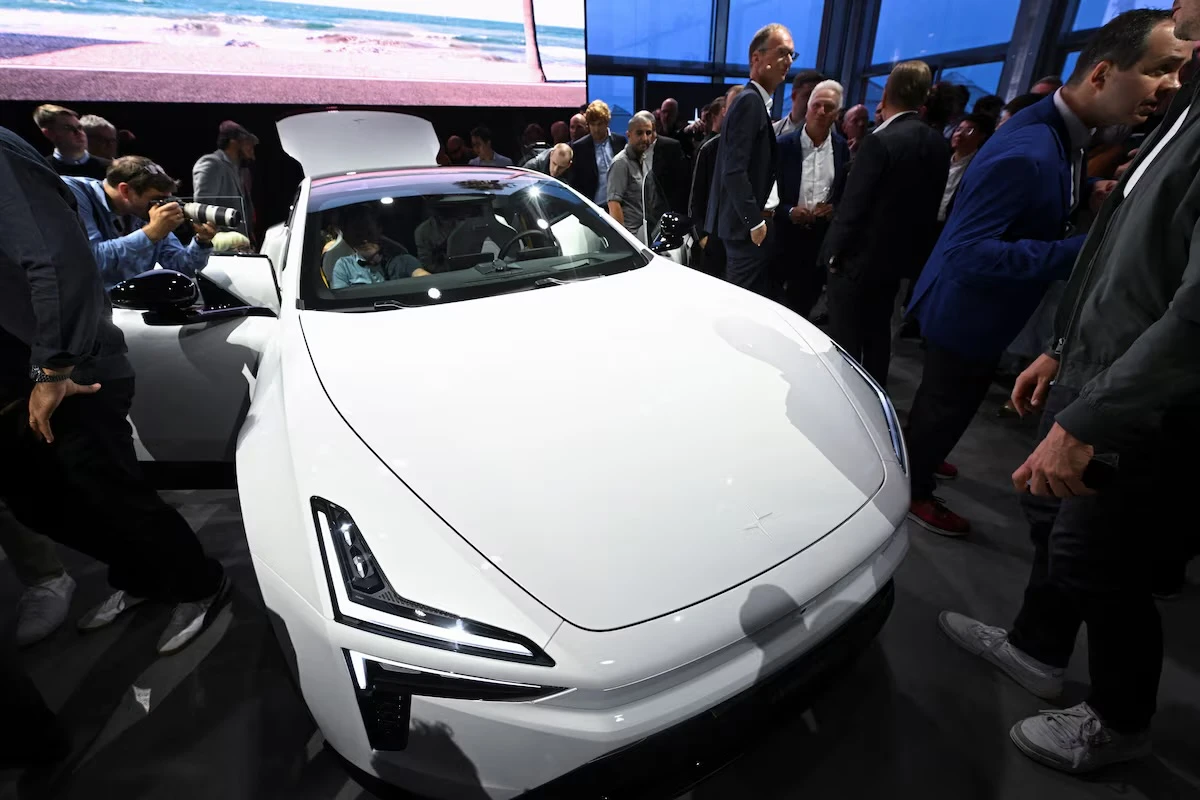
Polestar, the Sweden-based electric-vehicle company majority-owned by China’s Geely, said the Trump administration is forcing it to stop selling vehicles in the United States starting with the 2027 model year.
The decision is tied to the U.S. Connected Vehicles Rule, a national security regulation that restricts the sale or import of certain vehicles using connected technologies linked to China or Russia. The rule covers systems that allow cars to communicate through Bluetooth, Wi-Fi, cellular networks and some satellite communications.
The move marks one of Washington’s most direct actions yet against a Chinese-linked EV brand in the U.S. market. It also signals that the government is willing to apply the rule not only to cars built in China, but also to automakers with ownership or technology ties that fall under the regulation.
Polestar shares fell after the news, reflecting investor concern about the company’s already difficult path in the U.S. EV market.
Key Details
The U.S. rule was adopted in January 2025 under President Joe Biden and has remained in place under President Donald Trump. Its main purpose is to reduce the risk that connected vehicles could collect sensitive data from American drivers or be influenced through foreign-linked software and communications systems.
Polestar said it will continue to sell existing Polestar 3 and Polestar 4 vehicles in the United States and will maintain service support for current customers. The company also said it does not plan to appeal the government’s denial.
The decision comes as Polestar’s U.S. business remains small compared with its European operations. Only 6% of Polestar’s first-quarter sales came from the United States, while Europe represented 78% of sales. That makes the U.S. less important for volume, but still strategically relevant for brand visibility and global expansion.
The ruling also raises questions about the Polestar 3, the company’s only U.S.-manufactured model. Volvo Cars, which builds some Polestar vehicles, had planned to consolidate Polestar 3 production at its South Carolina plant. However, the latest decision could complicate those plans.
What Was Said
“The automotive industry is entering a new phase, based on regional dynamics.”
Polestar CEO Michael Lohscheller used that statement to explain the company’s broader shift toward regional production and sales strategies. In practical terms, Polestar is signaling that Europe will become its main growth engine while the U.S. becomes a more difficult market because of regulatory and geopolitical pressure.
The company also pointed to its plan to manufacture the future Polestar 7 in Europe, a move that fits with its effort to reduce exposure to markets where Chinese-linked EV companies face tighter scrutiny.
Why It Matters
The Polestar decision matters because it shows how the electric-vehicle market is no longer shaped only by price, design, range or charging access. It is now also shaped by data security, software supply chains, ownership structures and geopolitical risk.
Modern vehicles collect and transmit large amounts of information. For U.S. regulators, that creates concern when the software, hardware or corporate control of a car is linked to countries considered national security risks. This is why the rule focuses on connected-vehicle technology rather than only where a vehicle is assembled.
For consumers, the immediate impact may be limited if they already own a Polestar or are buying existing inventory. However, the longer-term effect could be fewer EV options in the U.S. market, especially from brands with Chinese ownership or supply-chain ties.
For automakers, the message is clear: selling connected vehicles in the United States may now require more than meeting safety and emissions standards. Companies must also prove that their technology supply chains and ownership structures comply with national security rules.
The case may also influence other carmakers. Ford and other automakers are reportedly working to obtain authorization for models already sold in U.S. showrooms. Volvo Cars, Polestar’s sister brand and co-founder, previously received authorization, but said it still needs to meet the rule’s specifications across its U.S. lineup.
What Happens Next
Polestar is expected to keep supporting current U.S. customers while focusing more heavily on Europe. The company has already described Europe as its largest growth engine, and the latest U.S. decision gives that strategy more urgency.
The future of the Polestar 3 will be closely watched. Volvo said production in China had not yet been halted and that it was too early to say whether the U.S. decision would change its manufacturing plans. That uncertainty could affect jobs, production strategy and Polestar’s ability to use U.S. manufacturing as a shield against trade restrictions.
Polestar is also trying to manage its product pipeline under pressure. Instead of launching entirely new models quickly, the company has chosen to refresh older models. Deliveries of a new Polestar 4 variant are expected later, followed by a revamped Polestar 2 in 2027.
The next fully new model, the compact Polestar 7 SUV, is planned for production at Volvo’s future factory in Slovakia. That model could become central to Polestar’s European strategy if the U.S. remains effectively closed to new sales.
Washington may also continue tightening restrictions on Chinese EVs. Lawmakers have already proposed stronger measures, and Chinese electric vehicles face steep tariffs. Together, these policies suggest the U.S. is building a broader wall around its domestic auto industry and connected-vehicle infrastructure.
Key Facts
- Polestar will not be allowed to sell new vehicles in the U.S. beginning with the 2027 model year.
- The decision is linked to the U.S. Connected Vehicles Rule targeting China- and Russia-linked technology.
- Polestar is based in Sweden but majority-owned by China’s Geely Holding.
- The company said it will continue supporting existing U.S. vehicles and customers.
- Only 6% of Polestar’s first-quarter sales came from the United States, compared with 78% from Europe.
Conclusion
The Polestar U.S. sales ban highlights a major shift in the global EV industry: connected-car technology is now part of national security policy. For Polestar, the decision accelerates its move toward Europe and raises questions about its U.S. production plans. For the wider auto industry, the message is even bigger: EV competition will increasingly depend not only on batteries and price, but also on software control, ownership ties and geopolitical trust.
Frequently Asked Questions
What's Your Reaction?
 Like
0
Like
0
 Dislike
0
Dislike
0
 Love
0
Love
0
 Funny
0
Funny
0
 Wow
0
Wow
0
 Sad
0
Sad
0
 Angry
0
Angry
0








Comments (0)